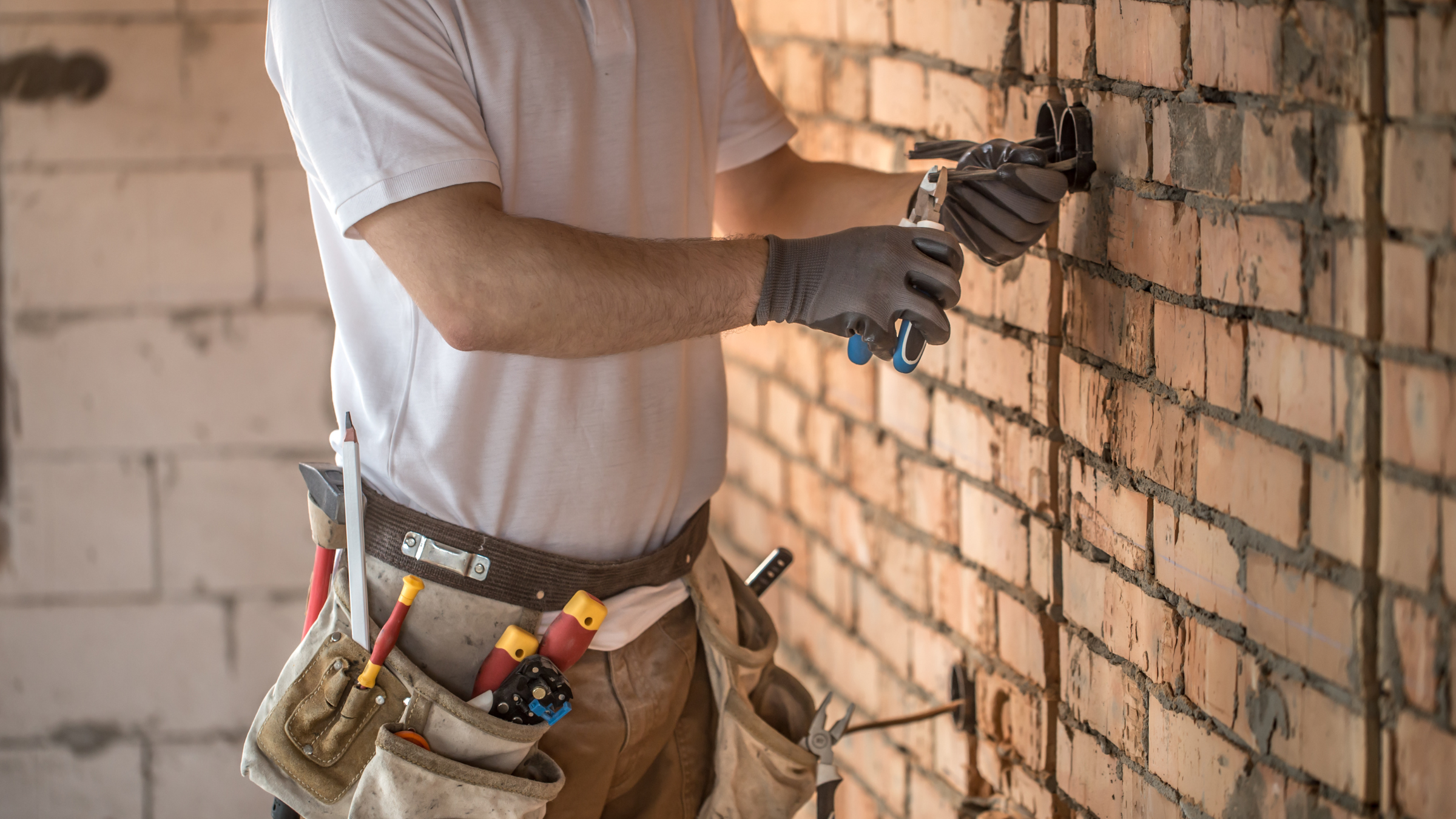
Chasing Walls & Fitting Back Boxes: A Clean, Safe First-Fix Guide
Planning sockets or switches on a solid brick wall? This step-by-step guide shows how to mark out, chase tidy cable runs, and fit flush back boxes safely—so your plasterer smiles and your electrician signs off. We’ll focus on the mechanical prep (cutting, drilling, fixing). Wiring and connection should be handled by a qualified professional.
Safety first: Isolate power at the consumer unit before you start. Wear safety glasses, cut-resistant gloves,
ear protection and a dust mask (FFP2/FFP3). Use dust extraction and work slowly—brick can chip and kick back. If you’re unsure,
hire a pro.
Tools & Consumables
Core tools
- Rotary hammer (SDS+ with depth stop)
- Cold chisel & club hammer (for crisp edges)
- Cordless drill/driver + masonry bits
- Wall chaser OR angle grinder with diamond blade (with extraction)
- Vac/dust extractor, masking, sheeting, sweep brush
Fixings & layout
- Metal or plastic back boxes (35–47 mm depth for sockets; check device)
- Galv. capping or conduit and saddle clips
- Filler/patching compound & PVA bonding
- SPIRIT level, square, tape, pencil, template
Plan the Route (and Height)
- Agree the socket height and alignment. Mark a level datum line around the room if doing multiples.
- Only chase in recognised safe zones: vertically or horizontally from accessories. Avoid diagonal runs.
- Scan the wall if possible. Note lintels, pipes, and existing cables.
Step-by-Step: From Mark-out to Box Fixed
- Mark the box outline. Use the back box itself as a template. Add the vertical chase path (straight to floor or ceiling route).
- Score the perimeter. A light pass with a wall chaser or grinder reduces surface chipping and keeps corners crisp. Connect a vacuum to control dust.
- Chase the cable run. Make two parallel grooves (~25–30 mm apart, depth as required). Knock out the web with a chisel, keeping the base of the chase as flat as possible for capping/conduit.
- Hollow the box recess. With an SDS+ rotary hammer and chisel bit, nibble inside the scored rectangle. Work gradually to target depth. Finish corners by hand for a neat fit.
- Dry-fit the back box. Check level, front face flush or 2–3 mm proud to suit skim. Knockouts facing the chase.
- Secure capping/conduit. Fix with clips; keep the run straight. Pull a draw-wire if conduit is continuous.
- Fix the box. Use appropriate plugs/screws (or box-spurs in block). Ensure earthing lug is accessible. Re-check level.
- Patch tidy. Dampen masonry, prime with diluted PVA, then infill around box and chase. Feather edges for minimal sanding.
Neatness Cheats (That Pros Use)
- Use the drill’s depth stop to avoid over-cutting. Consistent depth = quicker patch and better bond.
- Score and under-cut corners with a sharp chisel for factory-clean apertures.
- Group socket rows with a long level and spacer offcuts so fronts align perfectly after tiling or skimming.
When to Call a Qualified Electrician
If your work affects bathroom zones, consumer units, new circuits, RCD protection, or testing and certification—stop and book a qualified electrician.
This article covers mechanical preparation only. Final cabling, connections, and testing should be completed by a competent professional.
Common Issues & Quick Fixes
The box sits too deep after plastering
Fit a box extender (pattress extender). They’re inexpensive and restore correct device seating without re-chasing.
Crumbly edges around the recess
Consolidate with PVA, let it tack, then use a stiffer patching compound in two passes. Keep the front plane flat with a straight edge.
Chase wanders off line
Snap a chalk line, re-score lightly, and square the channel with a cold chisel. Fit capping to hide minor deviations and protect the cable.
Keep Your Workshop Flowing
Questions about delivery or returns? See our Shipping Policy and Return & Refund Policy. All tools are covered by our Warranty Policy. For help, contact us.

Add comment